
Malting: Where The Magic Happens
Exceptional beer does not begin in the brewhouse alone; it is refined in the maltings. Malting is the controlled transformation of barley into a brewing ingredient capable of delivering fermentable sugars, flavour, colour and structure. It is a disciplined balance of science and heritage, where temperature, moisture and timing are meticulously managed to unlock the grain’s full potential.
Maltings can be found across Britain, with some of the most respected located in East Anglia, particularly in Norfolk and Suffolk, as well as in Scotland. These regions sit at the heart of British malting barley production. Good proximity to high-quality barley crops, combined with generations of technical expertise and established infrastructure, has positioned them as centres of excellence for both brewing and distilling malt. The dry climate of East Anglia supports the production of consistent malting-grade barley, while Scotland’s long-standing malting tradition and cool climate contribute to its global reputation for grain quality.
The malting process begins with rigorous grain selection. Only barley meeting strict specifications for varietal purity, germination capacity, nitrogen content, moisture and screenings is accepted. Uniform grain size is essential to ensure even water uptake and consistent modification throughout the batch.
Steeping is the first operational stage, where barley is immersed in carefully controlled water cycles to raise moisture content to approximately 42–45%, initiating germination. Aeration and temperature control are critical at this stage to promote even hydration while preventing microbial activity. The aim is to awaken the grain in a uniform and controlled manner.
Following steeping, the barley enters germination. Over several days, under tightly regulated temperature and humidity conditions, the grain begins to sprout. Enzymes such as amylases and proteases develop and begin breaking down cell walls and proteins within the endosperm. This modification stage determines extract potential, enzyme availability and overall brewing performance. Careful monitoring ensures the malt reaches optimal modification without overgrowth.
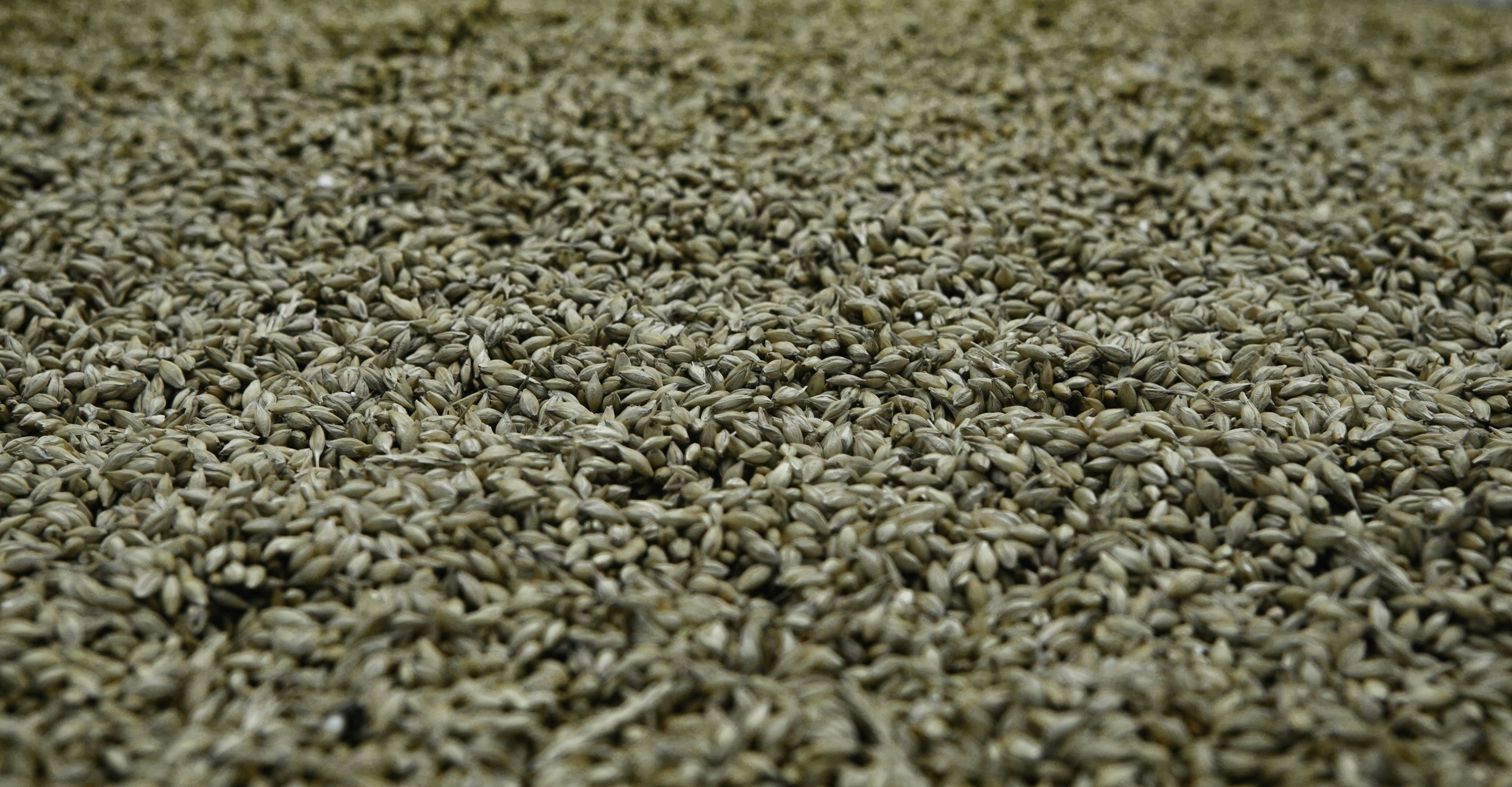
Kilning then halts germination through graduated heat application. Temperature profiles vary depending on the intended malt style. Lower kilning temperatures preserve enzymatic strength and produce pale, clean malts suited to lagers and pale ales. Higher kilning regimes encourage Maillard reactions, developing colour, depth and complexity for darker beer styles. Precise airflow and temperature control ensure consistency and protect flavour integrity.
After kilning, malt is cooled, cleaned of rootlets and rested before dispatch. Throughout the process, laboratory analysis verifies key parameters including extract yield, diastatic power, friability, nitrogen levels and moisture content, ensuring brewing specification is met.
At Atlantic Archipelago, we recognise that malt forms the structural foundation of our beers. From the barley fields of East Anglia to the precision of the maltings, every stage shapes the character, clarity and depth found in the final glass.